

Typecasting, Then and Now
Flea markets and swap meets are, for me anyway, as much fun for tripping down memory lane as hunting for bargains. At a recent antiques fair in my hometown of Petaluma, California, I stumbled across a toy that literally altered my destiny. Although it’s always disconcerting to realize that my life is someone else’s nostalgia, it was still comforting to spot a Junior Dial Typewriter like the one I got for Christmas in 1951 when I was a kid in Tennessee.
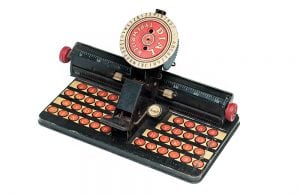
For those too young to remember, these gizmos required turning a big dial to the desired letter or number and pressing a lever to make it strike the ink ribbon and paper. It was a tedious exercise that nevertheless held me in thrall for hours at a time, and I started banging out (very) short stories. By summer, the magic had worn off simply because the thing was so slow. I switched to printing my stories, but the urge to type them lingered on. In the late 1950s, boys didn’t take typing in high school, so I decided to teach myself on my mother’s old Royal portable. If nothing else, the fake keyboard on my Junior Dial typewriter had taught me the location of the keys on a real one, so pretty soon I could hunt and peck with the best of them. I would never have won any typing contests, but as I cranked out one forgettable story after another, I told myself style and substance were vastly preferred to speed.
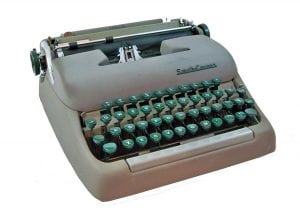
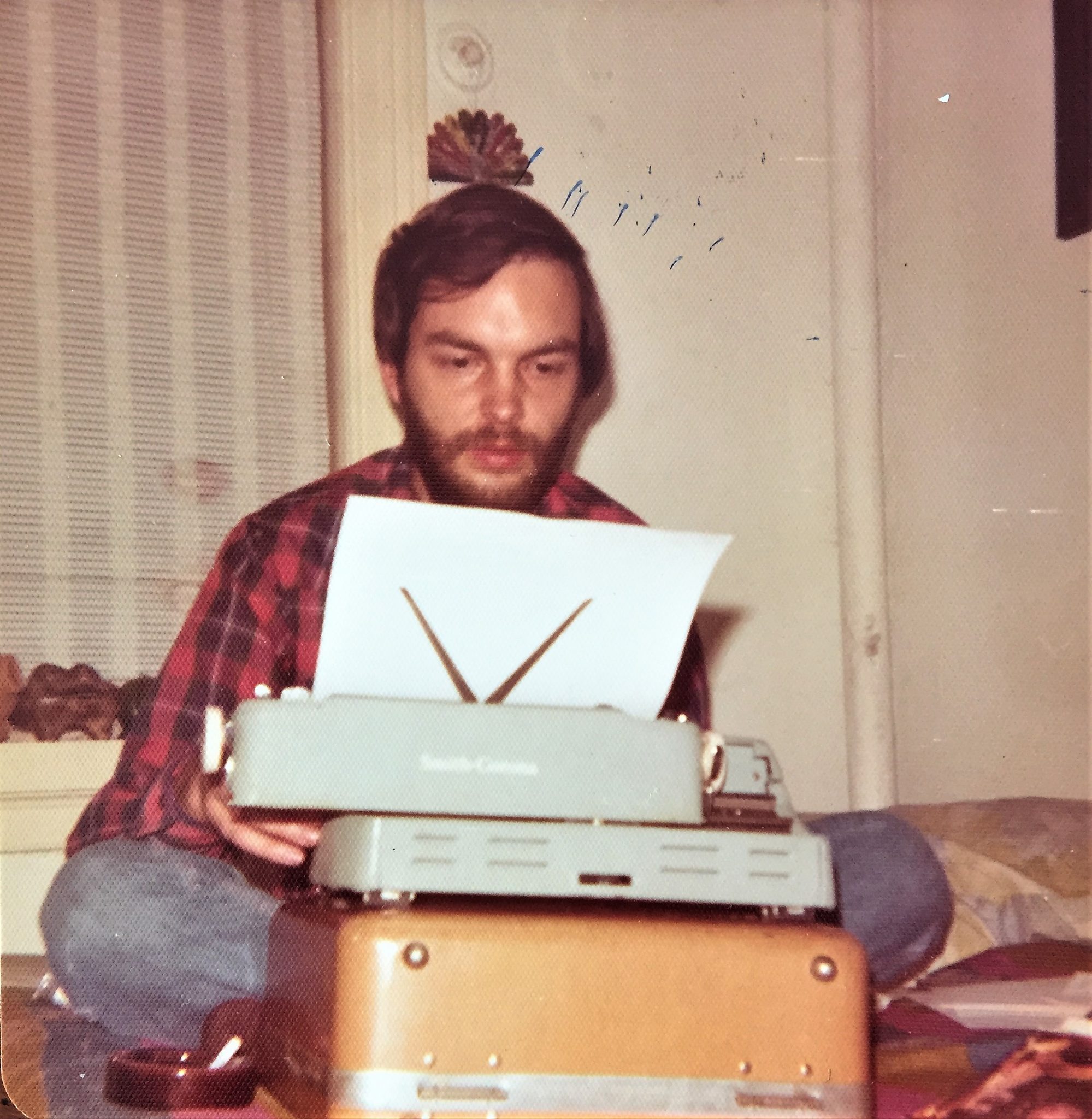
When I got to college, I picked up a used Smith Corona portable like the one pictured here, also seen at the antique fair. My particular model included foreign diacritical marks, a feature I considered very sophisticated despite having absolutely no use for tildes and umlauts. I schlepped that dented and scratched machine from one Atlanta apartment to another and ultimately to New York when I moved there in 1972. Here I am in 1976 working on one of several novels that never saw the light of day. I was living in a fifth floor walk-up on Bank Street in Greenwich Village and was so poor I didn’t have a table. This explains why I’m sitting on the bed and using the typewriter carrying case as a table. I could, unfortunately, afford cigarettes.
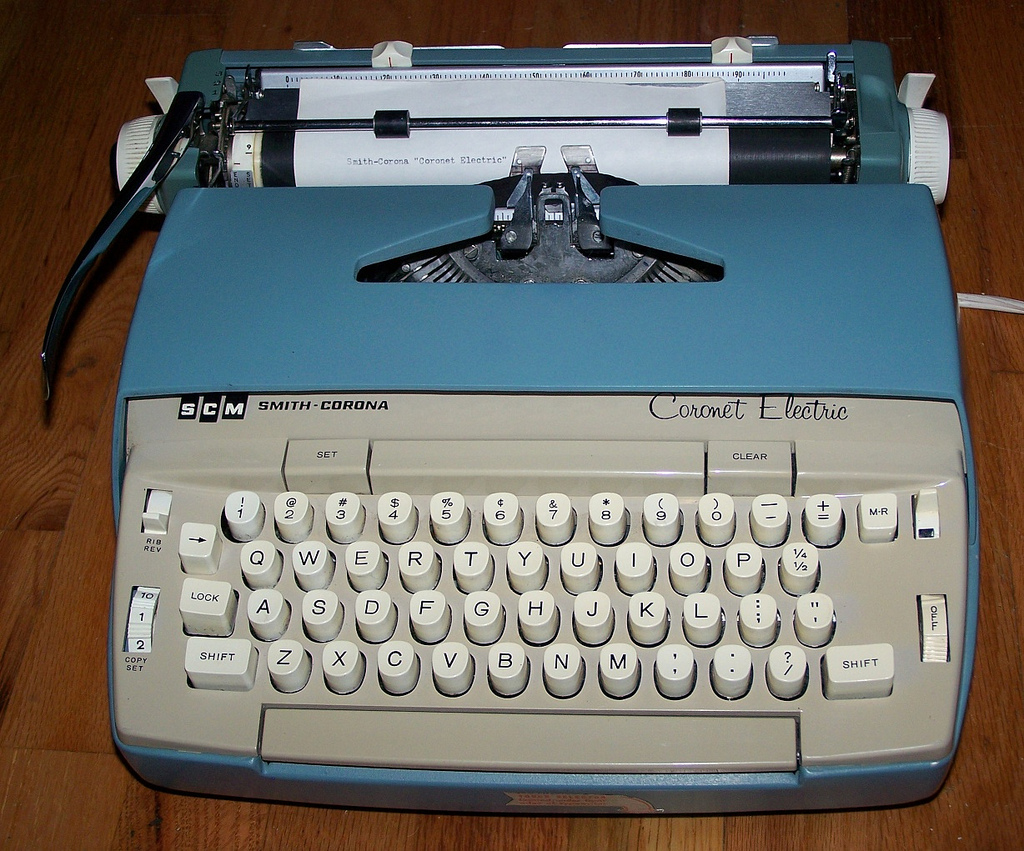
Reminiscing at the antique fair continued when I spotted a Smith-Corona Electric like the one below. I bought this same model in the early ’80s with royalties from my first published novel, a bodice-ripping potboiler called Bayou Passions. It wasn’t the Great American Novel and sure didn’t take the publishing world by storm, but it felt good to not only afford a snazzy new typewriter but a desk to set it on too!
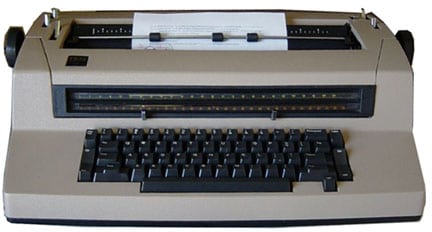
By the late ’80s, more novel contracts facilitated the quantum leap to an IBM Selectric. I didn’t see any of those at the fair, but I remember that space-agey machine was so fast that I constantly got ahead of myself. I didn’t think typing could get any easier, but that delusion evaporated with the arrival of word processors. I was initially reluctant to switch over because I was intimidated by the damned things. Happily a computer-savvy friend convinced me it was “time to put down the quill pen and join the world of modern writers,” gave me his old PC and taught me how to operate it. I was hooked and never looked back, not until the antique fair anyway. It amazes me to know I have a few author friends who still use typewriters and one who even prefers writing in longhand. To each his own of course.
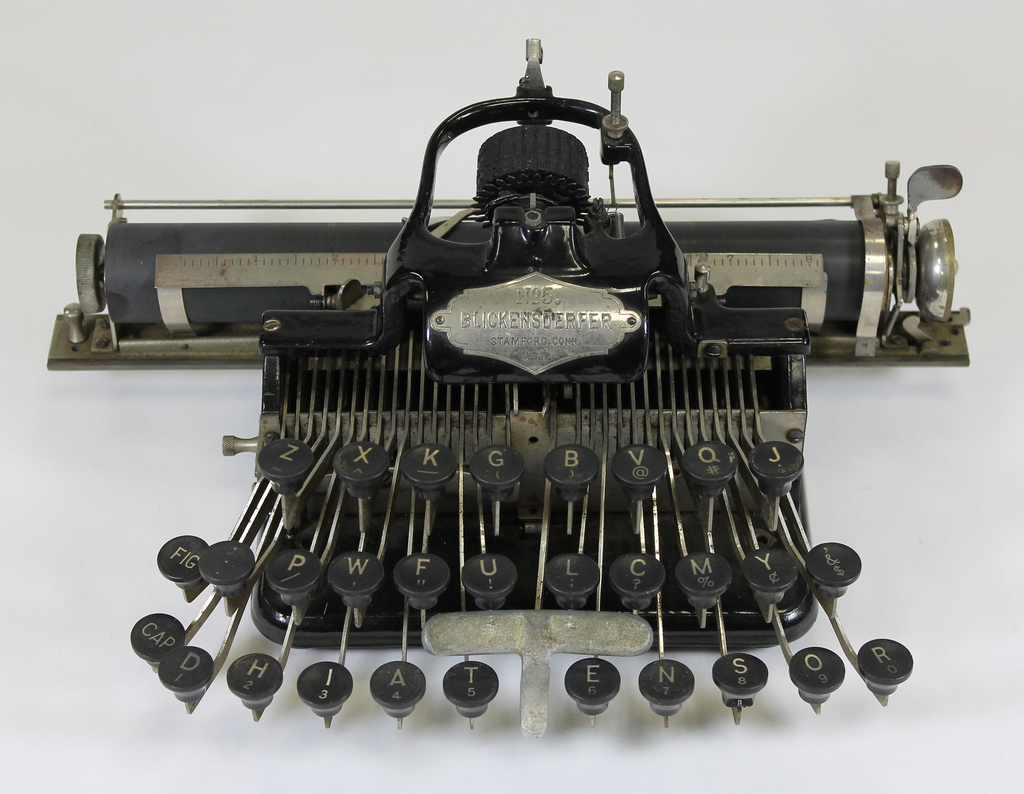
I had one more typewriter surprise before leaving the fair, and this one was a humdinger. The owner of this antique Blickensderfer told me it was introduced at the 1893 Chicago World’s Fair and that it had only 250 parts as opposed to the 2,500 parts of a standard typewriter. Not only was it portable and light-weight with an easily removable wheel for changing the typeface, it still worked! Maybe if I’d started out with that one, I’d still be using it.
Nah.
How funny! Margaret Moore Hill bought a Jr. Dial Typewriter at an auction early this year. Guess she’s old too
As a child in Carmel, California, my bedroom was opposite my father’s office where he banged out 5 scripts a week for the NBC radio drama ONE MAN’S FAMILY. Even to this day–though I adopted computers as far back as 1983 the sound of a typewriter is as soothing to me as a lullaby. The fast, clicking sounds meant all was well with the world. Daddy’s work was going well…
I certainly did enjoy this stroll down Memory Lane. Too bad you didn’t grow up with me in Squaresville, PA — typing classes were co-ed! And your Portrait of a Very Young Artist is quite fetching…