

Sweet Home, Alabama
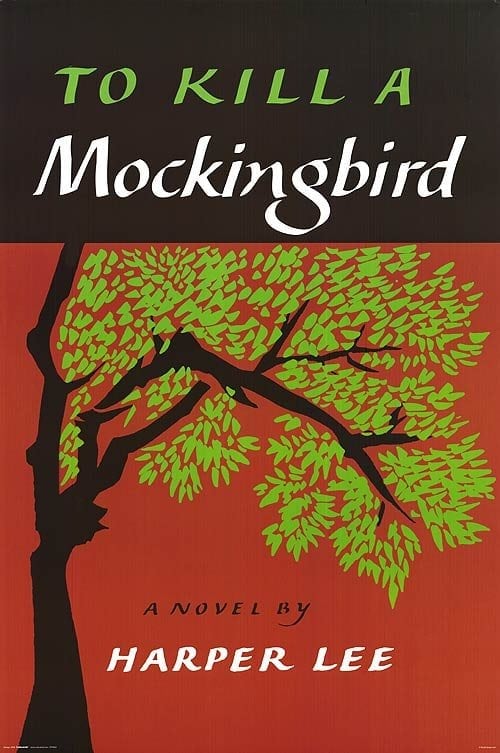
There are many reasons why certain novels transcend style and substance to ransack our hearts. They provide a seminal experience, borderline seductive even, delivering frissons as they lead us down paths as beguiling as they are unexpected. For me, To Kill a Mockingbird, Harper Lee’s sublime 1960 coming-of-age classic, is a first-class ticket for just such a journey.
I first read it when I was 16, over a half century ago, and still remember distinct frissons–exhilarating, amusing, at times deeply disturbing–as I followed the adventures of eight-year-old Scout, her older brother Jem and their father Atticus Finch in Depression-era Alabama. No doubt there was special resonance because I was also growing up in the segregated South, well aware of signs marked “White Only” and “Colored Only.” I recall thinking my hometown of Fountain City, Tennessee, was a lot like mythical Maycomb, Alabama, except everyone had jobs in 1960. But as I continued reading, I discovered there was a difference, and it was a big one that thrust Mockingbird right under my skin. Although Jem was three years younger, he was already raising questions about segregation, something I had yet to do. In those days Southern children were reared to respect and never question their elders, but sadly that sometimes meant accepting the unjust with the just. Granted I had glimpsed wrongfulness in our racially divided system, but it was Harper Lee who switched on that naked light bulb to show me the useful truth. No doubt she succeeded especially well because she chose children to lead the way.
Mockingbird is a simple but deceptively rich tale of Southern foibles and eccentricities, of deeds shameful and noble, of innocence lost and wisdom found. It won the 1961 Pulitzer, and in 2006 British librarians put it at the top of their list of books “every adult should read before they die.” The writing is so economical that scarcely a word is wasted, but two in particular haunt me after half a century. Those who have read the book will recognize them instantly; those who haven’t will hopefully want to know why they matter. They’re spoken by Scout near the end of the book when everything that came before coalesces into a sweet Southern reverie.
“Hey, Boo.”
They still give me that frisson.
What I remember most is Scout sitting with black folks in the balcony when her daddy leaves court. One of the men she is sitting near says something like this to her, “Scout, stand up. A hero is passing.” Or maybe it was “your daddy is passing.”
May have been from the movie but I think it was in the book, too. You would think I would remember; I’ve read it so many times.
Hey Michael, “hey Boo”, yes 2 unforgettable words indeed! One of my favorite all time books (movie too!). Even without growing up in the south, To Kill A Mockingbird becomes permanently etched in one’s psyche.
Thanks for paying tribute to this exceptional book.
I love your take on the seductive nature of well crafted conveyances in the novels we read as youths, leading us to a clean, well lighted place. For me, Brave New World was one of those.
“One believes things because one has been conditioned to believe them.”
Open the Pod Bay doors, Hal.
I read this novel last year when I was 15 and it is one of my favorites. Since you brought up your elders and having questions about just and unjust, I was just wondering how you think things have been since 50 years ago? Can you recommend any current books that will have the same frissons for me? Maybe I will have to find those on my own? 😉
We read it in class in eighth grade. Generated lots of discussion in a Springfield OR classroom. My parents told me stories of segregation from their own meanderings in the South, but like you Michael, Scout and Jem and Boo taught me the human cost of stories that seemed so distant. The bombing of the church, Medger Evers’ death and on and on, brought it much closer. Of course, years later when I found out that Oregon had one of the most virulent KKK chapters in the nation I really began to understand how widespread racism was here, all across the country. After I grew up, I cut a lot of slack to the generations in the South following the end of slavery. Slavery was, after all, the way things were. Its existence was often supported from the pulpit and it was the only way children were taught to see black faces. Something so deeply ingrained is hard to turn loose.
I also know that as I type on the North Shore of Long Island, only four or five miles from where I sit was a huge plantation that held slaves during the 1700s. One of the very first published Black Americans was Jupiter Hamon, a freed slave from the nearby Lloyd Manor whose descendant was often called upon to help me work on my boat. He’s a certified diver. The South wasn’t the only place the institution thrived, just the place it ended.