

Whistling “Dixie” in Brazil
When I was traveling across Brazil some years ago, a Rio lady noticed my Southern accent and asked if I’d heard about an old Confederate colony somewhere below Sao Paolo. I thought she was kidding until a little homework confirmed that, sure enough, thousands of former confederates, or confederados as they’re called in the local Portuguese, immigrated to Brazil in 1866, following the South’s defeat in the Civil War, and founded a town called Americano.
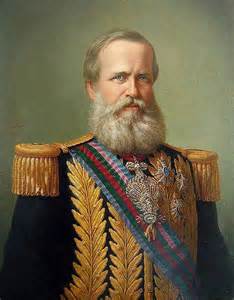
Brazilian Emperor Dom Pedro II made defeated Confederates an offer they couldn’t refuse.
The colonists came at the invitation of Emperor Dom Pedro II, a far-thinking monarch interested in promoting agriculture throughout his empire. He appealed to the bruised dignity of Southern cotton planters who had lost everything in the war and were chafing under Union domination. The emperor’s trump card, albeit an evil one, was slavery, abolished in America by President Lincoln’s 1863 Emancipation Proclamation but still legal in Brazil. Dom Pedro’s simple plan was to transfer slave-based cotton production from the United States to Brazil, and he had no shortage of experienced takers. The first arrival was Confederate Colonel William Hutchinson Norris, also a lawyer and ex-Alabama senator. Norris came in 1866 and sent for his family a year later. Several thousand more confederate loyalists followed from Georgia, South Carolina, Mississippi and Texas and brought with them the latest technology for cotton cultivation. Their crops did well in the steamy Brazilian climate, and a factory was built to process raw cotton for export to Europe. The colonists also grew tobacco, another highly profitable crop, and introduced something called the Georgia Rattlesnake, a luscious breed of watermelon.

Americano’s original town crest incorporated the Confederate flag.
The fledgling colony grew and flourished, but by 1900 heavy Italian immigration had reduced the Americans to only ten per cent of Americano’s population. Descendants of the earliest colonists still spoke English, and those who switched to Portuguese retained a Southern drawl that can, believe it or not, be detected to this day. Despite being far outnumbered, the confederados clung proudly to their heritage and, until recently, included the Confederate flag in the town crest. They consider themselves Brazilians first and foremost, but formed the American Descendants Association with three hundred members striving to preserve and perpetuate their unusual amalgam of Brazilian and American cultures.

Once a year, Americano celebrates its past with Southern belles and their Confederate beaux, Brazilian-style, of course.
The most colorful effort in Americano’s preservation efforts is the Festa Confederada, an annual celebration on the second Sunday in April which, in addition to being a rollicking good time, raises funds to maintain the cemetery where those first colonists are buried. Their descendants whip up a feast of fried chicken, chess pie, biscuits and plenty more down-home Dixie dishes, the samba and bossa nova are replaced by the Virginia Reel, and banjos play Southern songs popular at the time of the Civil War. The highlight is a beauty pageant featuring Brazilian lovelies in hoop-skirted ball gowns, escorted by dashing young blades in gray Confederate uniforms. Rebel flags fly high and proud for a day, and the evening concludes with a play about the most revered of all Southerners, General Robert E. Lee.
Confederates in Brazil? It gives a whole new meaning to the term “Deep South.”
Michael, this was fascinating. I read something not long ago about Americano and could hardly believe it. Good blog, as always!
Well, I declare! Who knew??? You seem to have an endless supply of little-known fascinating facts, dear Michael. Keep ’em comin’ because they sure are appreciated.
Wonder how good the fried chicken is…
Wow! This is really interesting. Certainly something left out of American History classes and textbooks. Thanks for sharing this, Michael.
Michael, I guess South America has long been a place for the losing side in a war to resettle and prosper, e.g. the Nazi settlements in Chili. The whole continent is an amazing ethnic and political mix.
I ordered your book (Creole Son) and it just arrived. I can’t wait to read it!
Enjoying your blog —
Jennifer